


- 30-second summary
- Is RewardTester worth your time?
- I signed up to test this platform myself
- The gap between marketing and legal reality
- The approval process led me to scam offers
- What happened after I walked away
- Where does your personal data actually go?
- Why this app testing model falls short
- Frequently asked questions
- Sources
30-second summary
RewardTester presents an attractive idea of earning money by testing mobile apps from your phone.
However, the reality behind the scenes is very different. Instead of real app testing, the platform relies on deceptive marketing, hidden data sharing, and redirects users to potentially dangerous third-party offers.
Pros
- Nothing
Cons
- Dangerous third-party offers
- No real app testing
- Hidden data sharing
- Fake countdown timers
Is RewardTester worth your time?
Yes, if you only want to see how aggressive lead-generation funnels work from the inside and don't mind exposing your email to unknown marketing networks.
No, if you want a reliable income stream without worrying about shady SMS subscriptions or data misuse, you are better off building an asset you control. For example, learning how to earn with affiliate programs on your own website gives you full control over the offers you promote.
I signed up to test this platform myself
I decided to go through the entire registration process on RewardTester.com to see what actually happens when a real person tries to sign up. What I experienced confirmed my initial suspicions.
The registration page promises you can earn up to $34 USD per hour testing mobile apps. The site claims to connect you with "legitimate app testing platforms" that are "vetted and verified." This sounds appealing, so I clicked Start Testing Apps to begin the registration.
The initial questionnaire was short — just 6 simple questions. In the next step, a 5-minute countdown timer ran above the form, and a warning below it read Limited app testing spots available today. I intentionally waited for the timer to reach zero. Nothing happened. The form still submitted without any issues. The urgency was completely fake.
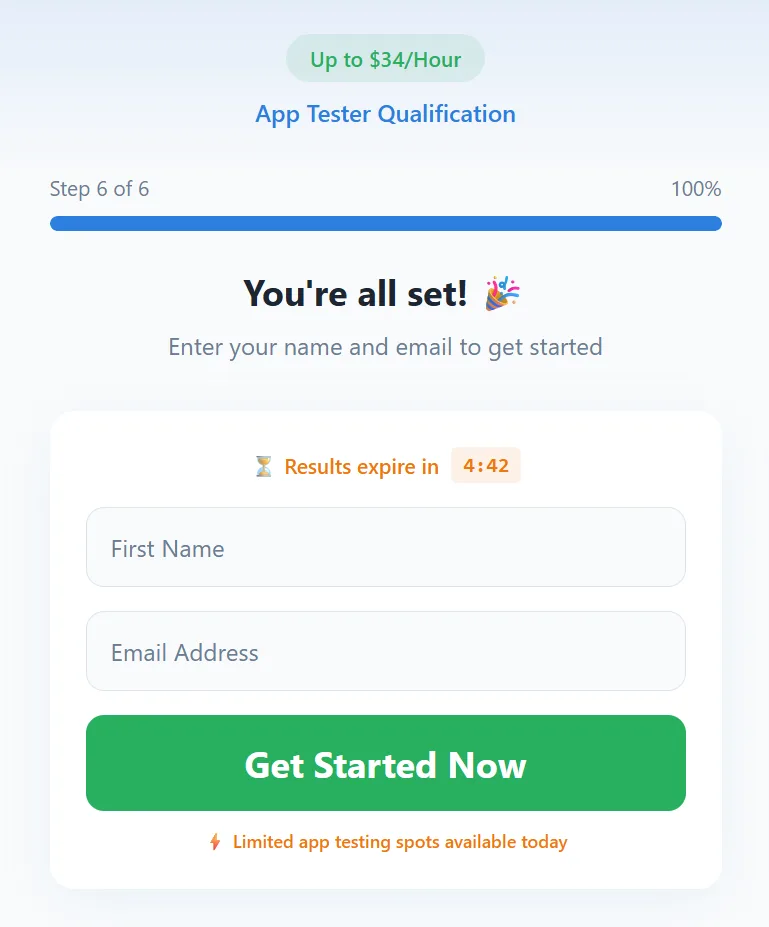
After submitting, the site displayed a claim that 2,847+ people joined this week. Given that I found zero external mentions of this company anywhere on the internet, this number is almost certainly invented. The "What Our Users Say" section features three testimonials with photos sharing identical grey backgrounds, strongly suggesting they were generated by artificial intelligence.
The gap between marketing and legal reality
The homepage advertises app testing and implies you'll be connected with real companies that pay for your feedback. I found this promise appealing at first glance.
However, the official Terms & Conditions explicitly define the service as providing promotional quiz-based experiences that connect users with third-party offers. This is a fundamentally different thing than "app testing."
The legal disclaimer further states that participation doesn't guarantee any reward, gift card, or compensation.
The approval process led me to scam offers
After registration, I was told I must complete two "app tests or sponsored offers" to get approved as a paid tester.
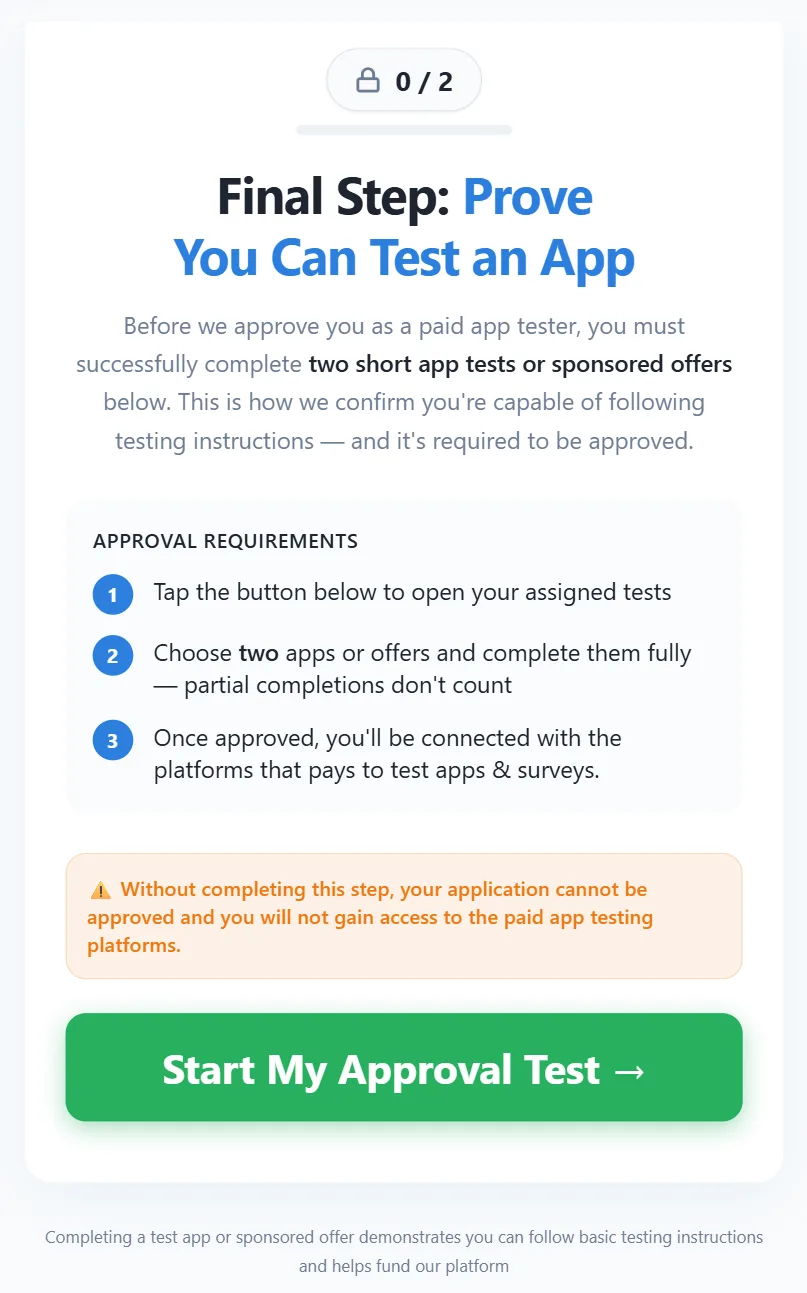
I clicked the Start My Approval Test button and was redirected to a completely different domain: authenticateapp.online.
The offers I found there included:
- A download link for what was described as an antivirus program, which produced a suspicious .exe file. I didn't install it, as the source was completely unverified.
- A Spanish premium SMS subscription service. The fine print — nearly unreadable due to blurred, tiny text — revealed a recurring charge of up to 36.25 EUR per month.
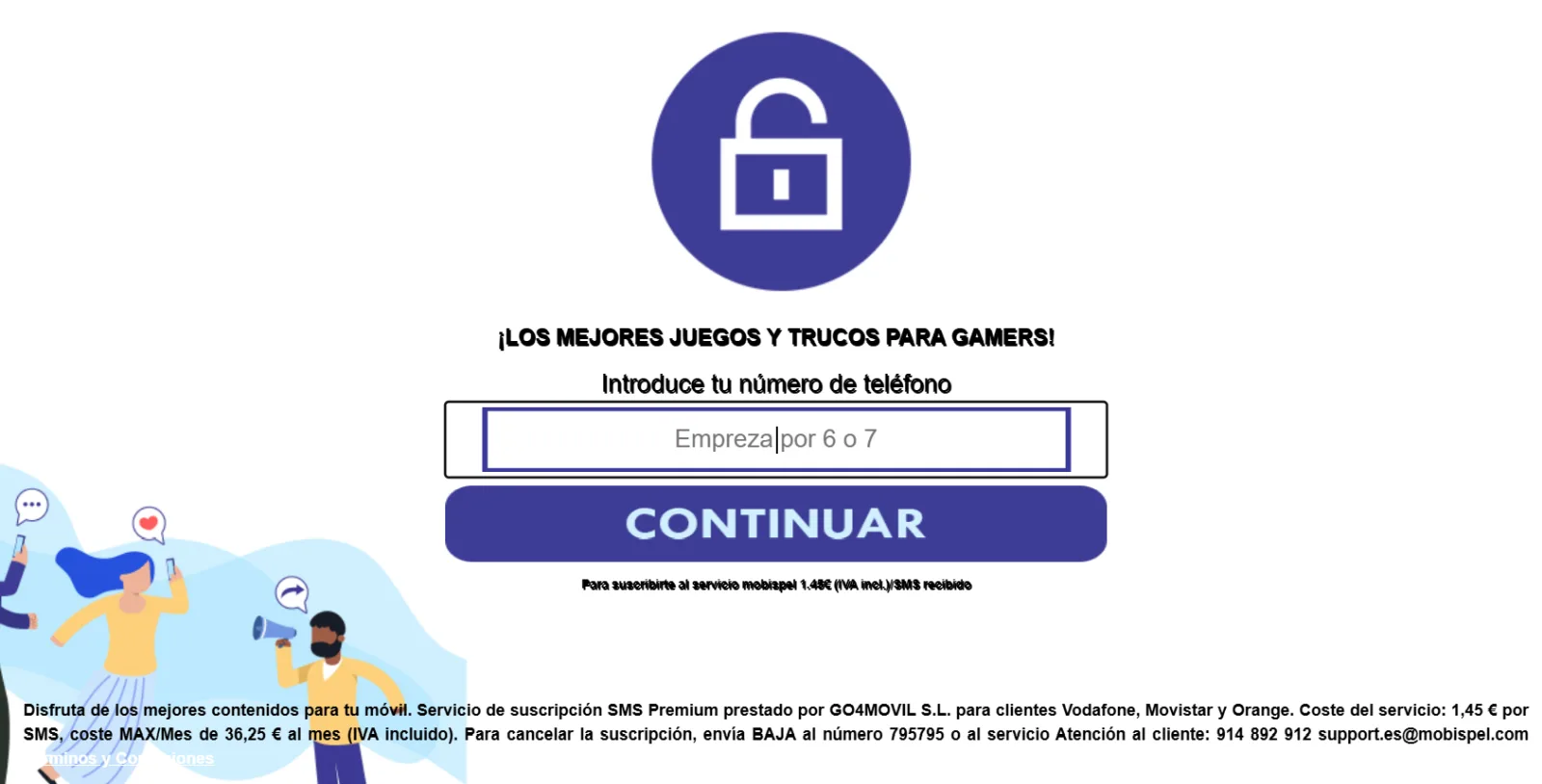
At this point, I stopped. The platform promised $34 per hour for testing apps, but the actual "approval" step required me to either download unknown software or subscribe to a premium SMS service. This is not app testing. This is a content locker designed to extract money or data.
You are playing by someone else’s rules
You are essentially building a castle on rented land—they can change their algorithm, cut your payouts, or suspend your account overnight.
Want to build something you actually own and control? Here are a few alternatives:
What happened after I walked away
Despite intentionally failing the approval requirements, I received an email the next day from a persona named "David." The email claimed my "first paid task is ready" and offered up to 14 USD for approximately 11 minutes of work.
This is significant: I never completed the required approval steps, yet the system still tried to engage me with a "task." This proves the approval process is just a gate to expose you to sponsored offers, not a real qualification step.
I clicked the task link. It led to two options: an affiliate link to a survey site, and a link to a sports betting platform. There were zero instructions on how the promised 14 USD payout would actually be processed.

Where does your personal data actually go?
The site provides no information about its operator, physical address, or company registration. The only contact method is a generic email address. This makes it impossible to hold anyone accountable.
The privacy policy reveals that when you submit the form, your name, email, browser data, and marketing parameters are transmitted to a lead processing endpoint at underdev.site. Your data is then shared with partners operating on domains like wetcj.site, naper.site, checkmyapp.space, and authenticateapp.online.
The policy also states that your information may be passed as part of the web address URL when you click through to a partner offer. This means your email and name can appear in browser history and server logs of multiple unknown third parties.
Why this app testing model falls short
This platform is only suitable for those curious about how aggressive lead-generation funnels operate. Anyone looking for actual income should look elsewhere.
Relying on a platform that can change its rules, redirect you to scam offers, or disappear overnight is not a strategy. Instead, you can build a local directory and charge businesses for visibility. I recommend reading how to make money with a local directory site to create a stable, independent income.